



Prosper and Celina are not waiting for the future anymore.
They are inside it.
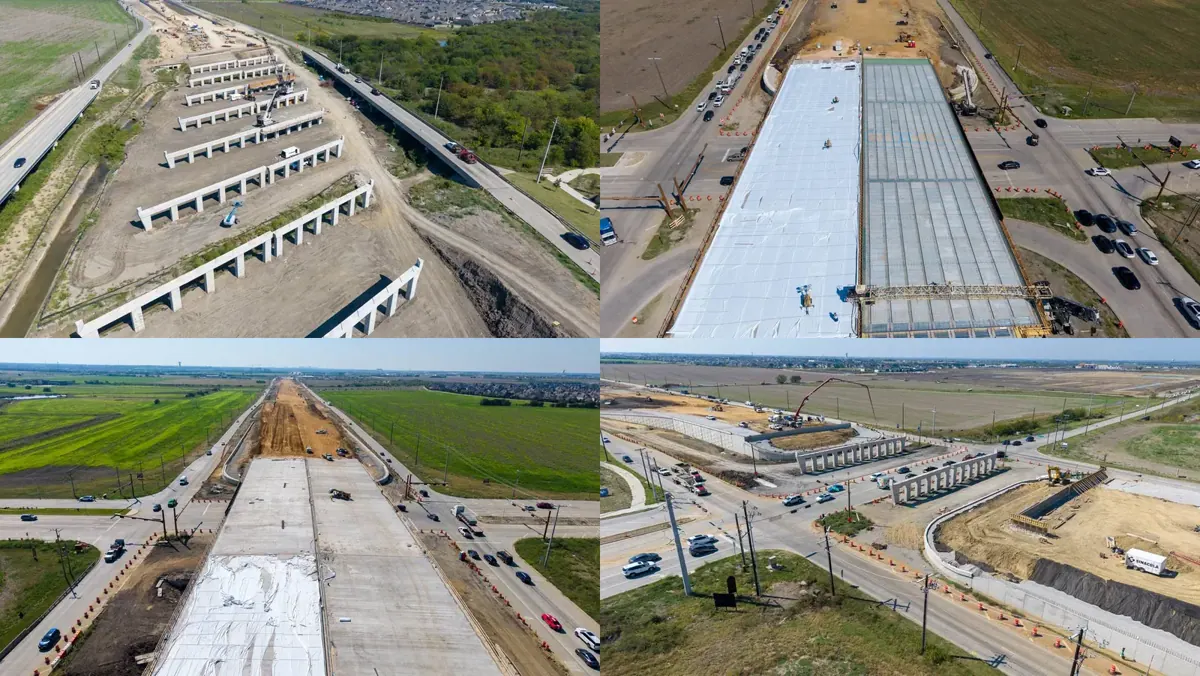
Community Impact listed 10 transportation projects in the Prosper-Celina area. The projects with published costs add up to about $92.11 million.
That number is already large.
It is also incomplete.
Several major items are still listed without final public cost figures, which means the real road bill for north Collin County is almost certainly higher than the number residents can see today.
Quick Read
- Community Impact listed 10 Prosper and Celina transportation projects.
- Published costs total about $92.11 million.
- The four most expensive listed projects account for about $75.79 million, or roughly 82% of the known total.
- First Street and Coit Road Phase 1 alone account for about $51.43 million, or roughly 56% of the known total.
- FM 1385 widening and Frontier Parkway updates still have costs listed as TBD.
The $92 Million Number Is The Floor
The headline number is $92.11 million.
But the more useful number is the one behind it.
First Street widening is listed at $27.79 million.
Coit Road Phase 1 widening is listed at $23.64 million.
Prosper Trail construction is listed at $13.45 million.
Choate Parkway reconstruction is listed at $10.91 million.
Those four projects alone add up to about $75.79 million.
That is roughly 82% of the known total.
That matters because this is not a scattered list of random road work.
The money is concentrated in a small set of corridors that are becoming the new spine of daily life in north Collin County.
First Street and Coit Road are the biggest tells.
Together, those two alone represent about $51.43 million, or roughly 56% of the known project cost.
That is the story.
Roads are the surface-level item.
Movement.
Access.
Emergency response.
School traffic.
Retail access.
The basic question of whether north Collin County can function after the rooftops arrive.
The Roads Tell You Where Growth Is Really Going
Prosper and Celina are not building roads for the towns they used to be.
They are building roads for the cities they are becoming.
That is why the project names matter: First Street, Prosper Trail, Coit Road, Choate Parkway, Frontier Parkway, FM 1385, Marilee Road, CR 52, Sunset Boulevard and Teel Parkway.
These names do not sound dramatic on an agenda.
They are dramatic if you live there.
They decide whether a parent can get a child to school without building the morning around traffic.
They decide whether a firefighter or ambulance can get across town when minutes matter.
They decide whether a business corridor feels reachable or miserable.
They decide whether new subdivisions feed into a working grid or dump thousands of cars into the same chokepoints.
This is where CCJ’s read is different from a basic project list.
The road names are a map of where the pressure is moving.
First Street, Coit Road and Prosper Trail point to east-west and north-south movement inside Prosper’s growth pattern.
FM 1385 and Frontier Parkway point to the regional load, where Prosper and Celina are no longer just managing local residents. They are absorbing the movement of a much larger north Collin County economy.
Choate Parkway, CR 52 and Teel Parkway point to Celina’s transition from fast-growing edge city to daily-use city.
That is the part residents need to understand.
Road spending is not only catching up to yesterday.
It is revealing where tomorrow’s pressure is already expected.
The Missing Numbers Matter
The most important phrase in the project list may be the least satisfying one.
TBD.
FM 1385 widening is listed without a final cost.
Frontier Parkway traffic signal updates are also listed without a final cost.
Those are not minor footnotes.
FM 1385 is one of the most important pressure corridors in the area because of how much north-south movement it carries through the growth zone west of the Dallas North Tollway.
Frontier Parkway is not a quiet local street either. It is part of the broader east-west growth grid connecting Prosper, Celina, school traffic, neighborhoods, commercial nodes and regional cut-through movement.
When those costs are not visible yet, residents do not have the full bill.
That does not mean something improper is happening.
It means the public cost picture is not complete.
And in growth cities, incomplete cost pictures tend to become bigger later.
Who Pays Is The Real Question
The public usually hears road projects as a list of improvements.
Residents should read them as a financing question.
Which portions are paid by the city?
Which portions are paid by the county?
Which portions are tied to TxDOT?
Which portions are connected to developers?
Which portions require debt, bonds, impact fees, grants, certificates of obligation or future budget pressure?
Which portions are delayed because utilities, right-of-way, design, bidding or interlocal agreements are not ready?
That is the scorecard residents should demand.
Not because the projects are bad.
Because a fast-growing city can approve homes first, celebrate commercial growth second, then ask residents to be patient while the road network catches up third.
That order is how people start to feel trapped by the growth they were promised would improve daily life.
The Resident Scorecard
Before Prosper and Celina residents hear another promise about relief, they should ask six basic questions.
One: what is the total cost, including the TBD projects?
Two: what exact date does each project become usable to drivers?
Three: what roads will be worse during construction before they get better?
Four: which school zones, neighborhoods and commercial areas get the most immediate relief?
Five: how much of the cost is local taxpayer money versus outside funding?
Six: what happens if growth arrives faster than the project schedule?
That last question is the dangerous one.
Because north Collin County’s growth problem is not only size.
It is timing.
If the roads arrive before the next wave of homes, schools, retail and daily traffic, growth can feel managed.
If the roads arrive after, residents pay twice: once through taxes and again through time.
Bottom Line
Prosper and Celina need the $92 million road list.
They probably need more than that.
The published numbers show two cities trying to buy enough mobility to survive the next wave.
The missing numbers show why residents should not treat the current total as the final bill.
Growth is not free.
In north Collin County, the bill is showing up in concrete, signals, widening, reconstruction, utility coordination, detours and delay.
If the roads come first, Prosper and Celina can still shape their future.
If the homes, schools, stores and regional traffic keep arriving faster than the infrastructure, residents will keep paying the real tax in minutes, fuel, stress and patience.
Sources: Community Impact listing of Prosper and Celina transportation projects, City of Celina capital improvement information, and Town of Prosper capital project information.