



Princeton talks like everybody is locked in.
The vote totals say otherwise.
That is the danger in the Place 4 runoff.
The city can argue all day about roads, growth, taxes, police, schools, businesses, apartments, City Hall, transparency, and what Princeton is becoming.
But a few hundred voters can still decide who gets the chair.
That is not democracy theater.
That is local power.
The people who show up get the city.
The people who stay home react after the decision is made.
Quick Read
- The Place 4 runoff is June 13.
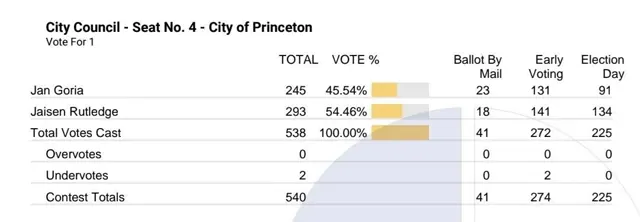
- Jan Goria led the first round with 198 votes. Jaisen Rutledge followed with 157.
- Fewer than 500 candidate votes were cast in the first Place 4 contest.
- Runoffs are quieter, which gives organized networks more power.
- The CCJ interviews give voters a way to hear both candidates before deciding.
The Numbers Are Brutal
In the first round, Goria received 198 votes.
Rutledge received 157.
Sharad Ramani received 103.
Hassan Abdulkareem received 17.
That is fewer than 500 candidate votes in a city that talks about growth constantly.
If Princeton residents want to know why local politics feels controlled by small circles, this is part of the answer.
Small circles vote.
Everyone else reacts later.
Runoffs Reward The Obsessed
Runoffs are not normal elections.
There is less noise. Less casual attention. Less big-ballot energy. Fewer people paying attention.
That means precinct chairs matter. churches matter. neighborhood groups matter. campaign texts matter. Facebook shares matter. family group chats matter. one person reminding ten people matters.
That is why the interview feature matters too.
It gives voters something to send besides “trust me.”
They can send the candidates talking in their own words.
The Real Stakes
This seat matters.
Princeton lists Place 4 as vacant.
Someone is going to sit there and vote while the city keeps dealing with growth, roads, commercial development, public safety, budgets, trust, and daily-life pressure.
One seat cannot fix the whole city.
But one seat can change the question being asked before a vote.
And sometimes the question is the whole fight.
Bottom Line
Princeton does not have a shortage of opinions.
It has a turnout problem.
If residents want to choose between fresh voice and ready-now experience, they have to do more than watch the race happen.
They have to vote.
Sources: CCJ’s full Jan Goria and Jaisen Rutledge runoff interview feature, City of Princeton elections page, and Collin County election results page.