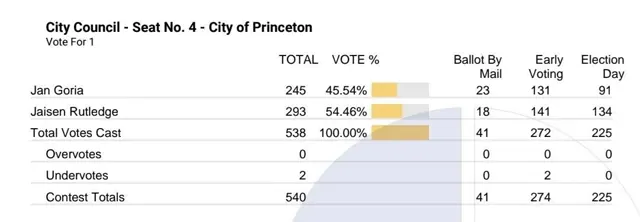




The third candidate in Princeton’s Place 4 runoff is growth.
It is not on the ballot, but it is everywhere.
It is in the traffic. It is in the subdivision maps. It is in the school pressure. It is in the missing restaurants. It is in the budget confusion. It is in the police and fire questions. It is in the feeling that Princeton got handed a bigger future before daily life was ready for it.
Jan Goria and Jaisen Rutledge are the names.
Growth is the problem voters are actually judging.
Quick Read
- Goria said she personally would love to see growth stop or slow, while admitting Princeton cannot simply erase projects already in motion.
- Rutledge argued Princeton still has tools if the city uses commercial recruitment, incentives, zoning strategy, and regional coordination better.
- The interviews showed two different growth instincts: resident resistance versus operational management.
- Both candidates know homes without enough business growth puts pressure on homeowners.
- The runoff is really about who voters trust to handle the next phase of Princeton.
Jan Says What People Feel
Goria said the line a lot of residents probably wanted to hear.
“Personally, I would love to see it stop.”
She was talking about growth.
That does not mean she promised a magic shutdown button. She acknowledged projects are already in the pipeline and state law limits what cities can do.
But the first part matters.
Because a lot of Princeton residents are tired of being told growth is inevitable in a tone that sounds like they are supposed to be grateful for the inconvenience.
Goria’s message is emotional and simple: yes, the city is growing, but someone at the table still needs to care what residents are losing.
Jaisen Says Use The Tools
Rutledge’s answer was less emotional and more tactical.
He talked about Chapter 380 agreements, commercial recruitment, zoning strategy, Lake Lavon, medical facilities, major employers, retail, restaurants, and relationships with neighboring cities.
His point is that Princeton cannot complain its way into a better tax base.
It has to recruit.
It has to negotiate.
It has to track.
It has to use the tools it still has before the city becomes permanently shaped by decisions nobody can undo.
The Real Split
Goria sounds like the voter who is tired of being run over by growth.
Rutledge sounds like the person trying to build a dashboard while the growth is still running.
That is the split.
One says slow down and remember the resident.
One says manage harder and stop pretending the city can wish itself back.
Both are responding to the same pain.
They just want different weapons.
Why This Matters
Growth is not a slogan in Princeton.
It is the daily experience.
It is the drive. The wait. The missing grocery choice. The lack of big employers. The public-safety demand. The question of whether commercial growth will ever arrive fast enough to help taxpayers.
This is why a single council seat matters more than people think.
The Place 4 winner will not control every lever.
But they will sit at the table while the city keeps deciding what kind of place Princeton becomes.
Bottom Line
Princeton voters should stop asking only who sounds better.
Ask who understands the growth pain better.
Goria understands the resentment.
Rutledge understands the mechanics.
The runoff decides which one voters want in the chair.
Sources: CCJ’s full Jan Goria and Jaisen Rutledge runoff interview feature, City of Princeton elections page, and Collin County election results page.