



Princeton’s growth area is starting to look less like empty land and more like a future regional map.
Homes are coming. Roads are changing. Schools are expanding. Retail is chasing rooftops. Public safety demand is rising.
Now the institutional layer is becoming impossible to ignore.
That is the layer that makes growth permanent.
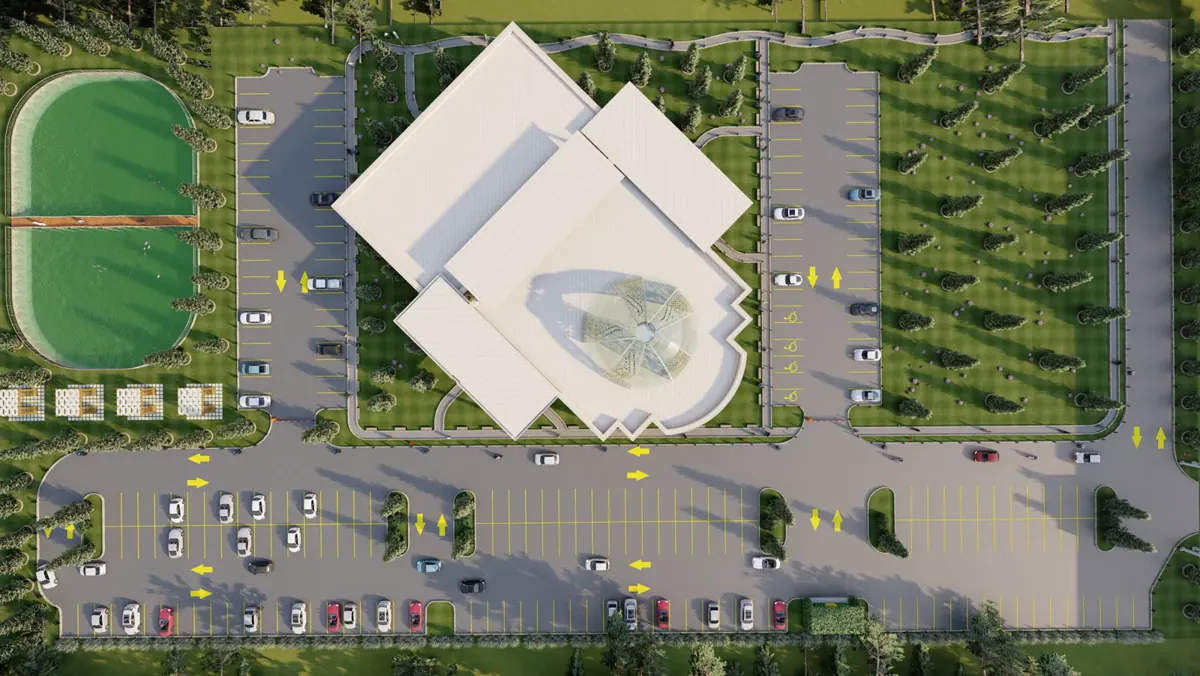
Princeton Islamic Center is working toward a major new mosque and community center at 943 County Road 456. Nearby, The Meadow, formerly EPIC City, remains tied to a major legal and development fight around a proposed 402-acre community with housing, worship, education, and community uses.
Those are separate projects.
Together, they tell residents something important: northeast Collin County is becoming a destination with its own institutions, not a quiet bedroom-community edge.
The timing matters because Princeton itself is no longer growing quietly. The newest Census estimates put Princeton at 43,524 residents after 18.1% growth in one year, ranking No. 3 nationally among cities over 20,000 by percentage growth.
Add major religious institutions to that kind of population surge and the story changes from land use to regional power.
That changes traffic.
It changes politics.
It changes public identity.
And it changes what local leaders need to explain before residents wake up inside a region they never fully understood was being built.
Quick Read
- Princeton Islamic Center’s proposed mosque would add a major religious and community institution inside the growth area.
- The Meadow / EPIC City fight remains active nearby in Collin and Hunt counties.
- PIC’s campaign page frames the mosque as a $6 million project with education, youth, recreation, community, and overflow capacity.
- Princeton’s latest Census estimate is 43,524 residents after 18.1% growth in one year.
- The Meadow / EPIC City fight has been tied to a proposed 402-acre community.
- Major institutions can shape traffic, family networks, school choices, housing demand, and public identity.
- Residents should watch whether northeast Collin County becomes a regional hub before local infrastructure catches up.
- The question is what kind of region is being built.
The Hub Effect
A hub is not created by one project.
It forms when several pieces begin pointing in the same direction: land, population, roads, schools, religious institutions, youth programming, community networks, and money.
That is why the mosque story and The Meadow story now belong in the same public conversation.
One is a proposed mosque and community center in Princeton’s growth area. The other is a larger development fight tied to a proposed community near Josephine. Both are connected to the same regional shift: the northeastern edge of Collin County is no longer an afterthought.
The scale is what matters.
PIC’s own campaign describes prayer capacity, classrooms, youth spaces, recreation, overflow capacity, and a multi-phase fundraising plan. The Meadow has been described around housing, worship, education, retail, senior living, clinics, and recreation.
This is where land use turns into regional identity.
A $6 million mosque campaign in a city that just posted 18.1% one-year growth is not a small neighborhood footnote. A 402-acre religiously connected development fight nearby is not a routine zoning argument.
Those numbers point in the same direction: northeast Collin County is becoming a place where institutions arrive while roads, utilities, and public understanding are still catching up.
Places that used to be described by what they were near are now becoming destinations on their own.
Why Institutions Matter More Than Rooftops
Rooftops create population.
Institutions create loyalty.
A family may live in one city, shop in another, worship in another, send children to activities in another, and build its social life through a regional center. Once that pattern forms, the old city boundaries matter less than the institutions people actually organize around.
That is why residents should pay attention now.
If Princeton’s growth area becomes a hub for regional institutions, the traffic, politics, public expectations, and cultural identity of the area will shift long before most people understand what happened.
What Daily Life Could Look Like
The first changes are practical.
More vehicles. More event traffic. More weekend and evening activity. More construction. More pressure for road improvements. More questions about parking, drainage, utilities, and emergency access.
Then come the deeper changes.
Different community calendars. Different youth networks. Different public expectations. More organized civic pressure. More outside attention. More pressure on local leaders to balance old residents, new residents, institutions, developers, and regional groups.
That is how a place changes.
Not overnight.
One institution at a time.
What Leaders Should Say Out Loud
Princeton and Collin County leaders should stop treating these as isolated agenda items.
Residents need a regional view.
Where are the major institutional projects? What roads serve them? What utility capacity exists? What school and public-safety pressure follows? What public meetings are still ahead? What legal authority does each government actually have?
If officials can map subdivisions, they can map institutional growth.
If officials can talk about rooftops, they can talk about institutions.
Silence does not make the pattern disappear.
It only makes residents feel like they were the last ones to know.
Bottom Line
Princeton’s growth area could become a regional religious and community hub.
That may excite some residents and alarm others. But the one thing it should not be is invisible.
The public has a right to understand the pattern while there is still time to shape it.
Northeast Collin County is not waiting quietly anymore.
It is becoming something.
Residents should know exactly what that something is before the map is already drawn.
Sources: The Princeton Journal’s original report on Princeton Islamic Center, Princeton Islamic Center campaign page, Princeton Islamic Center new masjid page, Collin County Journal on The Meadow / EPIC City, and TPR/KERA reporting on the latest Double R MUD lawsuit.