



Updated May 9, 2026, 9:32 a.m. This story has been updated to include another lawsuit filed by Texas Attorney General Ken Paxton tied to the Double R Municipal Utility District No. 2A fight.
Most people thought this story had already been stopped.
The lawsuits came. The state investigations came. Collin County flagged the application as incomplete. Hunt County disapproved the plat. Attorney General Ken Paxton told local officials to reject anything tied to the project. For months, the public message around EPIC City was simple: Texas was trying to shut it down.
But the latest court fight shows something different.
The Meadow, formerly known as EPIC City, is still alive. It is still fighting. It is still moving through courts, agencies, county review, and public pressure. And now, as Princeton Islamic Center works toward its own major mosque project at 943 County Road 456, northeast Collin County is facing two major Islamic development stories at the same time.
That timing changes the weight of the story.
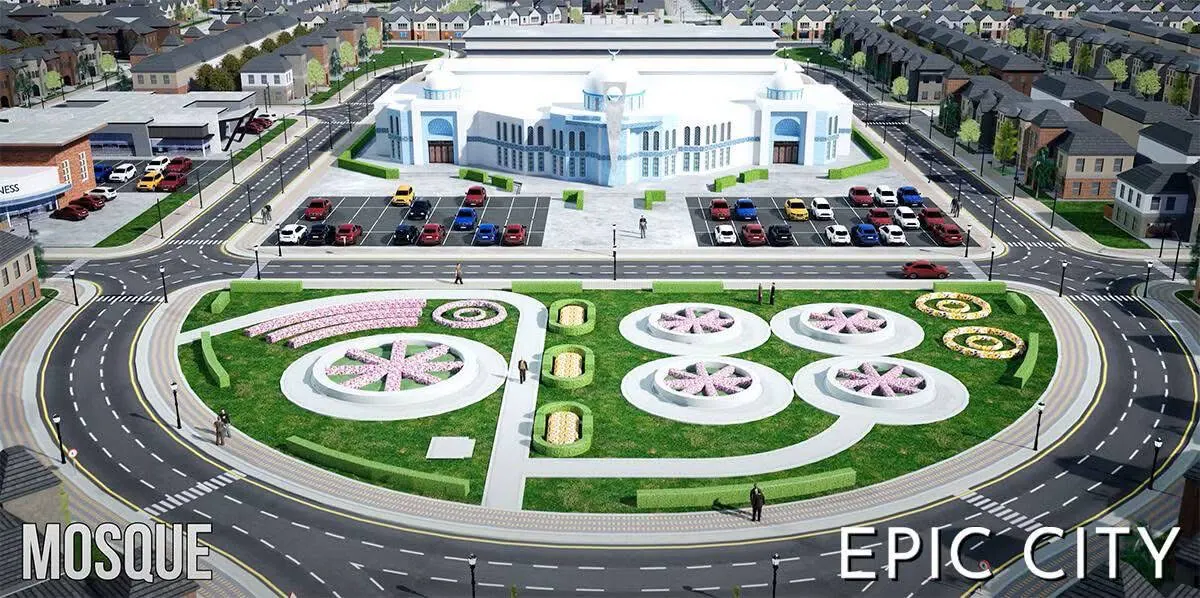
One project is a local mosque and community center inside Princeton’s growth area. The other is a 402-acre regional development near Josephine, spread across unincorporated Collin and Hunt counties, with plans that have included more than 1,000 homes, a mosque, school, senior living, apartments, clinics, retail, sports fields, and other community uses.
The dominant number is 402 acres. That is the scale of The Meadow. It is not a small religious campus. It is not a single building. It is a proposed community large enough to reshape roads, infrastructure, housing demand, public attention, and the cultural map of the area around it.
Quick Read
- A Travis County District Court ordered the Texas Workforce Commission to comply with an agreement it made with Community Capital Partners, the developer behind The Meadow, formerly EPIC City.
- The ruling would have required the agency to review and respond to fair housing documents submitted by the developer.
- Paxton appealed to the Fifteenth Court of Appeals on May 1, which suspended the temporary injunction while the case continues.
- Since this story was first published, Paxton has filed another lawsuit tied to Double R Municipal Utility District No. 2A, alleging open-meetings and water-code violations connected to the broader EPIC City/The Meadow fight.
- The project has not received final development approval. But the court fight shows it is still active and still trying to move forward.
- The Meadow remains proposed as a 402-acre development in unincorporated Collin and Hunt counties near Josephine.
- Plans have included more than 1,000 homes, a mosque, a K-12 faith-based school, senior housing, apartments, clinics, retail, sports fields, and other community uses.
- Collin County previously found the plat application incomplete, and Hunt County later disapproved plans over deficiencies.
- The larger story is now regional: The Meadow is still fighting to advance while Princeton Islamic Center is also moving toward a major mosque and community center.
The Court Fight That Changed The Momentum
The newest update came from Travis County.
On April 29, a district court ordered the Texas Workforce Commission to comply with an agreement it had made with Community Capital Partners. That agreement came after earlier fair housing allegations against the project. The developer later sent fair housing policies, website language, marketing plans, procedures, and related materials to the agency.
The developer’s complaint was that the state agency did not review or respond to those materials.
The court sided with the developer at the trial-court level. That ruling mattered because it gave The Meadow a real legal win after months of state pressure. For the first time in this phase of the fight, a judge told a state agency it had to act on the agreement rather than leave the project sitting in agency silence.
That does not mean The Meadow was approved.
It means the developer won a court order that would have forced movement on one part of the process. In a project this controversial, movement matters.
Paxton Froze The Order, But Not The Story
Paxton responded fast.
On May 1, the attorney general’s office said it appealed to the Fifteenth Court of Appeals. That appeal suspended the temporary injunction while the case continues. In plain terms, the state does not have to comply with the Travis County order right now.
That is why this update should be read carefully.
The developers won the lower-court round. Paxton froze that win on appeal. The case is still active. The project is still not finally cleared. But the project also has not gone away.
That is the part residents should pay attention to.
For months, the public impression was that EPIC City had been boxed in by state power. The latest ruling shows the fight is not one-sided. The developer is still using the courts, still challenging state agencies, and still trying to force the process forward.
The New MUD Lawsuit
The legal pressure also expanded after this story was first published.
Paxton has filed another lawsuit tied to Double R Municipal Utility District No. 2A, the utility district connected to the broader EPIC City/The Meadow dispute. Public reporting from The Real Deal and the Houston Chronicle says the new filing alleges violations of the Texas Open Meetings Act and Texas Water Code.
That lawsuit does not mean The Meadow has been approved or stopped by itself.
It does show the state’s fight is still active and has moved beyond one agency appeal. The utility-district structure matters because infrastructure, water, wastewater, financing, and local development authority can shape whether a large project like this can actually move from concept to construction.
What The Meadow Still Is
The Meadow is the rebranded version of EPIC City.
The earlier EPIC branding created national attention because the project was promoted as a Muslim-centered community tied to the East Plano Islamic Center. State officials pointed to past marketing language and raised concerns about fair housing, investor structure, religious preference, and whether the development could operate in a way that excluded or favored certain buyers.
The project has since been renamed The Meadow. Its original public website has been stripped down and now says a new website is coming soon.
But the scale has not disappeared.
The project remains tied to a proposed 402-acre development near Josephine. Public reporting and state filings have described plans including more than 1,000 residential units, a mosque, a K-12 faith-based school, senior living, apartments, clinics, retail, sports fields, and other community infrastructure.
That combination makes it different from ordinary subdivision growth.
Subdivisions add rooftops. Retail follows rooftops. A project like this builds a full institutional ecosystem: homes, school, worship, community services, recreation, and commercial space organized around one identity and one development vision.
That is why the court fight matters beyond legal process.
The County Roadblocks Are Still Real
The latest court win does not erase the local roadblocks.
Collin County previously found The Meadow Phase 1 plat application incomplete. County officials said required materials were missing and that the application could not move into full review until deficiencies were addressed.
Hunt County also disapproved plans, citing technical, regulatory, and legal deficiencies.
Paxton has also urged Collin County officials to reject any future plat applications tied to EPIC City or The Meadow. His March letter pointed to active litigation, alleged securities violations, and questions around the Double R Municipal Utility District.
The MUD fight is separate but important. Paxton’s office sued over actions involving Double R MUD and later secured a temporary injunction that stopped disputed board actions and declared many prior actions void. The state’s position is that the utility-district maneuver appeared designed to help the project move forward while avoiding normal oversight.
The newer lawsuit keeps that issue alive. Instead of fading after the injunction, the Double R MUD fight has become one of the central legal pressure points around whether The Meadow can keep advancing.
All of that means The Meadow still faces serious barriers.
But barriers are not the same as burial.
The project is still in the legal system. The developer is still fighting. The court record is still moving. That is the practical reality.
Why This Hits Princeton Now
This story is no longer happening in isolation.
Princeton Islamic Center is working toward a major mosque and community center at 943 County Road 456, inside Princeton’s growth area and extraterritorial jurisdiction. PIC’s own campaign describes an 800-plus worshipper prayer hall, six classrooms, youth areas, community spaces, recreation space, overflow capacity, and extensive parking.
At the same time, The Meadow remains in active legal and development fights as a 402-acre regional project centered around housing, worship, education, and community life.
Those two facts now sit next to each other.
For residents, this is the real shift. One project can be dismissed as a single development. Two projects, both moving in different ways at the same time, create a regional pattern.
North and northeast Collin County are already changing fast through rooftops, traffic, school crowding, road pressure, and infrastructure delays. Now major religious and cultural institutions are becoming part of the growth story. These projects do not simply respond to growth. They can help organize where families move, where children are educated, where community loyalty forms, and what future development pressure looks like.
That is why people who never followed court filings still need to understand what is happening.
What Residents Will Notice First
The first effects will be practical.
Roads. Traffic. Utility pressure. County review. Emergency access. School demand. Construction patterns. Public hearings. Online arguments. County meetings that suddenly become packed because residents realize the project is still alive.
Then the deeper effects follow.
A development of this scale can change the daily rhythm of an area. It can create a destination for families across the region. It can pull housing demand toward a specific community model. It can make a quiet rural edge feel like the front line of a larger cultural and development fight.
For Princeton, the connection is obvious. The city is already absorbing rapid growth. Residents are already watching schools, roads, police calls, and public services stretch under pressure. A major mosque project inside Princeton’s growth area and a 402-acre Islamic-centered development nearby both point to the same broader reality: the area is not just getting bigger. It is being remade.
Why This Feels Different
Most developments are easy to understand.
A subdivision means more houses. A store means more traffic and more sales tax. A school means more buses, more drop-offs, and more families.
The Meadow is different because it combines all of those pieces around a single community concept. Housing, worship, school, senior living, retail, recreation, and public-facing services are all part of the same development conversation.
That creates permanence.
It also creates trust questions. Residents see the rebrand from EPIC City to The Meadow. They see the old website stripped down. They see county applications rejected as incomplete. They see state lawsuits, fair housing disputes, MUD fights, and now a court order followed by an immediate appeal. The result is not clarity. It is pressure.
That pressure is why this story keeps returning.
The public conversation has not caught up to the scale of what is still being attempted. Many residents hear “Paxton stopped it” and assume the project is over. The latest court fight shows that assumption is wrong.
Final Take
EPIC City did not disappear.
It changed names. It hit county roadblocks. It drew state lawsuits, including a newer lawsuit tied to Double R MUD. It faced investigations. It lost momentum in public. Then it won a lower-court order against a state agency, and Paxton had to appeal to stop that order from taking effect while the case continues.
That is not a dead project.
It is a project still trying to move forward through every available path.
Now that Princeton Islamic Center is also advancing a major mosque and community center in Princeton’s growth area, residents are looking at something larger than one controversial development near Josephine.
They are looking at a regional shift.
The rooftops came first. The infrastructure strain followed. Now the institutions are arriving, and the legal fights around them are not over.
The question is no longer whether people should pay attention.
The court fight already answered that.