



Frisco’s growth debate eventually runs into one uncomfortable question.
How much of this city’s transformation is tied to national labor policy?
That question makes people nervous because it pulls the story out of city hall and into corporate hiring, federal immigration rules, wages, housing prices, school enrollment, and who gets to shape local life.
That is why H-1B visas keep coming up.
The H-1B program is sold as a specialty-occupation pipeline for skilled workers. In real life, it is tied heavily to technology, consulting, engineering, finance, and corporate labor strategy.
Frisco sits inside the exact kind of region where that policy becomes visible.
Families do not need to know every visa category to feel the effects. They see the new subdivisions, the professional-class migration, the school shifts, the housing prices, the cultural change, and the feeling that the city changed faster than anyone got permission to discuss.
Frisco’s own numbers show why the issue lands there.
The city’s 2026 profile lists a population of 245,470, a median family income of $175,668, an average assessed home value of $736,094, 33.7% work-from-home, and 69.3% of adults 25 and older with a bachelor’s degree or higher. It also lists the city as 33.6% Asian.
Frisco ISD’s own facts page lists Asian students at 45.02% of enrollment.
Those numbers do not answer every H-1B question. They explain why residents are asking.
Quick Read
- USCIS says FY 2026 H-1B eligible registrations fell to 343,981 from 470,342 in FY 2025, a 26.9% drop after integrity changes.
- USCIS selected 118,660 unique beneficiaries, resulting in 120,141 selected registrations.
- The federal government has acknowledged fraud and abuse concerns by changing the selection process.
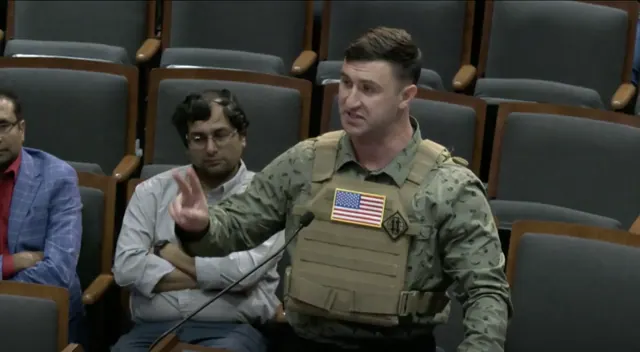
- CBS Texas reported that H-1B concerns became part of Frisco’s demographic debate.
- Frisco’s own profile shows a highly educated, high-income, work-from-home-heavy economy where skilled-labor policy matters.
- The local question goes past legality into wages, housing, schools, and civic identity.
- Leaders should answer with data instead of scolding residents for asking.
Why H-1B Matters In Frisco
Federal visa policy can feel distant until it changes a neighborhood.
Companies hire. Workers relocate. Families settle. Schools absorb. Housing demand rises. Religious and cultural institutions grow. Professional networks deepen. Voting habits and civic expectations shift over time.
That is how policy becomes daily life.
Frisco is not a random suburb in this debate. It is wealthy, educated, corporate, high-income, and connected to the broader North Texas tech economy.
Frisco’s city profile lists a median family income of $175,668, work-from-home at 33.7 percent, and bachelor’s degree or higher attainment at 69.3 percent. It also lists 87,651 households and 93,139 housing units, which means every major workforce shift lands directly in housing demand.
That is the kind of city where skilled-labor policy does not stay abstract.
It lands in the school district, the housing market, the office market, the neighborhood, and the ballot box.
The Federal Government Knows The Program Has A Trust Problem
USCIS has already changed the H-1B registration process.
The agency said FY 2026 H-1B eligible registrations fell to 343,981 from 470,342 in FY 2025. That is a 126,361-registration drop in one cap season. USCIS selected 118,660 unique beneficiaries and 120,141 selected registrations.
That matters.
When a federal agency changes a system to protect integrity and registrations drop by 26.9%, residents are not crazy for asking whether the old system was being gamed.
That does not mean every worker, every company, or every application is fraudulent.
It means the system itself has been serious enough to require repair.
Frisco residents are allowed to ask whether that national system has local consequences.
The Corporate Side
The cleanest version of the H-1B argument says companies need high-skilled labor and America benefits from attracting talent.
That is the pitch.
The harder version asks whether companies use the program to control labor costs, deepen dependence on foreign-worker pipelines, avoid training American workers, and reshape local economies without residents ever voting on it.
That is the part people want answered.
If companies are importing labor because America truly lacks workers, prove it.
If companies are using the program because it is cheaper, easier, or more controllable, say that too.
The public deserves the real answer, not the polished one.
What Residents Are Really Asking
Residents are asking whether the system is fair to American workers.
They are asking whether housing demand is being intensified by corporate relocation pipelines.
They are asking why school districts must plan around demographic shifts created partly by decisions made in boardrooms and federal agencies.
They are asking whether local leaders understand how national labor policy becomes local pressure.
Those are legitimate questions.
The lazy response is to call every concern ugly and move on.
The serious response is to separate legal immigration, corporate labor strategy, visa integrity, local displacement, school planning, housing pressure, and civic assimilation so residents can see what is actually happening.
What Frisco Should Demand
Frisco leaders do not control federal visa law.
They can still tell residents the truth about local effects.
Which industries are driving relocation? What share of workforce growth is foreign-born? How does professional-class migration affect housing demand? What school planning assumptions are changing? How do major employers use visa labor locally? Are there credible fraud complaints? What pressure does this put on American graduates trying to compete?
If the answer is harmless, publish the facts.
If the facts are complicated, publish them anyway.
Silence only makes residents believe the real story is being protected from them.
Bottom Line
The H-1B question behind Frisco’s growth is not going away.
It sits at the intersection of immigration, corporate power, schools, housing, wages, and American workers.
Frisco became successful because people wanted opportunity, safety, good schools, and a serious future.
Now residents are asking who gets to define that future.
They deserve numbers, not lectures.
Sources: USCIS H-1B electronic registration process data, CBS Texas reporting on Frisco’s demographic debate, Frisco At A Glance 2026, and Frisco ISD Facts & Figures.