



Plano approved more than another redevelopment discussion.
It put one of the largest public-money questions in city history directly in front of residents.
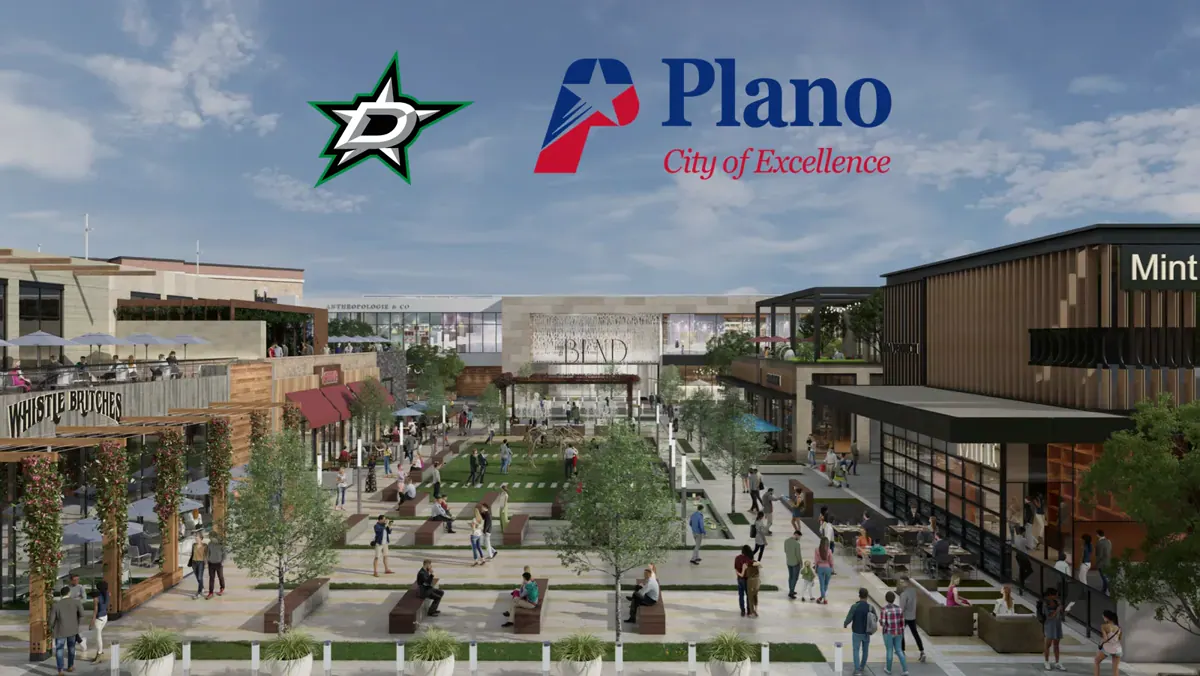
On June 8, Plano City Council approved a nonbinding letter of intent with the Dallas Stars, an incentive agreement tied to the Willow Bend redevelopment, and a tax increment reinvestment zone around the project area. Reporting from KERA and Fox 4 says the framework could involve up to $700 million in public infrastructure costs for a roughly $1 billion arena project.
The vote does not build the arena by itself.
But it moves the city from rumor to framework, and that is where residents need to pay attention.
Quick Read
- Plano City Council advanced the Dallas Stars arena proposal on June 8.
- The plan centers on The Shops at Willow Bend site in West Plano.
- The public framework could involve up to $700 million in infrastructure costs.
- The arena project has been described around a roughly $1 billion price tag.
- Plano also approved up to $15 million in incentives connected to Willow Bend redevelopment.
- Voters could be asked in November to approve venue-related taxes.
- The Stars’ American Airlines Center lease runs through 2031.
- Plano says the new TIRZ applies only to non-residential properties along the Dallas North Tollway.
- The real resident test is not “arena or no arena.” It is whether the public risk is locked down before the hype takes over.
The Number Is The Story
The first number residents will remember is $700 million.
That is the number large enough to pull people into the fight. Supporters will call it a growth bet. Opponents will call it taxpayer risk. Both sides understand the same basic truth: a dollar figure that large changes the political temperature immediately.
Plano leaders are not describing this as a blank check from the general fund. The financing structure would rely heavily on future tax growth around the project area, including a TIRZ and possible venue taxes if voters approve them.
That distinction matters.
But residents should not let financing language make the decision feel smaller than it is.
Public finance is still public power. Future tax growth is still money the city is choosing to route toward a specific project. Bonds still require confidence. Infrastructure still has to be built. Traffic still has to move. Police, fire, parking, noise, hotels, event crowds, and surrounding neighborhoods still have to absorb the result.
Plano is asking whether a hockey arena sounds exciting and whether Willow Bend should become a regional entertainment district with the city helping build the floor underneath it.
The Deal Has Three Different Buckets
This is where residents need more than the normal TV-news version.
The public conversation keeps collapsing the whole thing into one sentence: Plano could help fund a Stars arena.
That is too vague.
There are at least three buckets residents should separate.
First, the arena and sports district idea. That is the headline and the emotional hook.
Second, the Willow Bend redevelopment problem. The mall site has been weakening for years, and Plano has a real incentive to avoid letting that much valuable land sit underused.
Third, the financing structure. That is where the public risk lives.
A TIRZ can sound painless because it uses future tax growth inside a defined zone. But future tax growth is still a public resource. If the city dedicates that growth to one district for decades, residents should ask what other city needs are pushed behind it.
Venue taxes can also sound painless because visitors, hotel guests, parking users, ticket buyers, rental-car customers, and event users carry much of the load.
But the political question remains the same.
Who gets the upside?
Who carries the downside if the projections miss?
What Plano Is Really Buying
Plano is chasing more than hockey.
It is trying to buy a new center of gravity.
That is the part most fast articles will miss.
The city already has corporate prestige. It already has strong schools, strong neighborhoods, retail history, and a major tollway spine. What it does not have is the kind of regional entertainment anchor that makes people from outside Plano choose Plano at night, on weekends, and during major events.
The Stars could change that.
So could concerts, hotel activity, restaurants, retail, public spaces, and the redevelopment around the arena.
That is the upside.
The risk is that Plano pays destination-district money and gets destination-district problems faster than destination-district benefits.
Traffic does not wait for the full tax base to mature.
Neighborhood disruption does not wait for the bond math to prove itself.
Police and public safety demand does not wait for the final phase.
Residents feel the pressure immediately.
Revenue promises usually arrive later.
Willow Bend Became The Perfect Pressure Point
This proposal lands because Willow Bend is not healthy enough to ignore.
The old mall model has been fading. Big-box retail departures changed the property. The site sits near the Dallas North Tollway, surrounded by valuable land, established neighborhoods, and a city trying to decide whether it wants to act like a suburb, a corporate center, or a true regional destination.
That is why the fight reaches past sports.
If the Stars come, Plano gets a new identity marker.
No longer just corporate campuses, schools, restaurants, and quiet subdivisions.
Plano becomes the city that pulled a major league franchise up the tollway.
That is powerful.
It is also disruptive.
The same move that gives Plano national visibility may give nearby residents more traffic, more event-night pressure, more noise, more density, and a city government with a bigger appetite for destination-style development.
The Neighborhood Math Is Different From The Citywide Math
Citywide, the project may be easy to sell.
A struggling mall gets revived. Plano gets a franchise. The city gets national attention. Tax growth could help fund infrastructure. Restaurants and hotels could follow. Residents get a major entertainment district without driving to Dallas.
That is the brochure version, and parts of it are real.
But people near Willow Bend will do a different calculation.
They will count event nights.
They will count cars.
They will count noise.
They will count cut-through traffic.
They will count how long it takes to get out of their own neighborhood when the district is active.
That is why the city cannot treat opposition as people being negative about growth.
For many nearby residents, this is not an abstract economic-development bet. It is a direct change to the place they bought into.
The city has to win that argument with traffic plans, security plans, parking plans, noise rules, road improvements, and enforceable terms.
Good feelings will not be enough.
The November Question Could Be The Real Fight
The council vote was the first step.
The voter question may be the hard one.
Axios and KERA reported that Plano could seek voter approval for venue-related taxes, including taxes tied to hotel bookings, short-term vehicle rentals, parking, admissions, and venue use.
That is where the public has to stop treating this like a sports headline.
If the arena needs a voter-approved tax package, residents should demand plain answers before campaign season turns the issue into slogans.
How much of the $700 million is hard public infrastructure?
What happens if projected tax growth comes in lower than expected?
Who pays for cost overruns?
What protections exist if the development underperforms?
How many event nights are expected?
What specific road, parking, public safety, and neighborhood protections are required before the first puck drops?
Those are not anti-growth questions.
They are adult questions.
The CCJ Scorecard For Voters
Before voters say yes or no, they should demand a public scorecard.
One: total public exposure. Not the cleanest talking point. The full exposure.
Two: hard infrastructure list. Roads, utilities, drainage, parking, public safety, pedestrian access, traffic control and who pays for each item.
Three: repayment protections. If the district underperforms, residents need to know what backstop exists.
Four: cost-overrun rules. Every major project says it has a plan until costs move.
Five: neighborhood protections. Event traffic, noise, security, lighting, hours, parking spillover and enforcement.
Six: team obligations. Lease length, maintenance duties, arena-use rules, public access and what happens if the team later wants something else.
Seven: opportunity cost. If future tax growth is locked inside the district, residents deserve to know what other city priorities will not get that money.
This is where Plano can separate a serious public deal from an expensive emotional campaign.
If the project is as strong as supporters believe, it should survive the scorecard.
Bottom Line
Plano may have a rare opportunity.
A tired mall site could become a regional arena district. A major franchise could move into Collin County. Willow Bend could become relevant again in a way ordinary retail redevelopment never could.
But the price tag changes everything.
When the number is $700 million, residents should not clap because it sounds big or panic because it sounds scary. They should force the city to prove the math, show the risk, and explain exactly what Plano gets in return.
The Stars may bring the spotlight.
The public-money question will decide whether Plano residents believe the spotlight is worth the bill.
Sources: City of Plano / Dallas Stars announcement on the June 8 approvals, Visit Plano summary of the approved actions, KERA reporting on Plano’s June 8 arena vote, Fox 4 reporting on the $700 million public-funding framework, Axios Dallas reporting on the next voter-tax step, and Dallas Stars announcement of the nonbinding LOI.