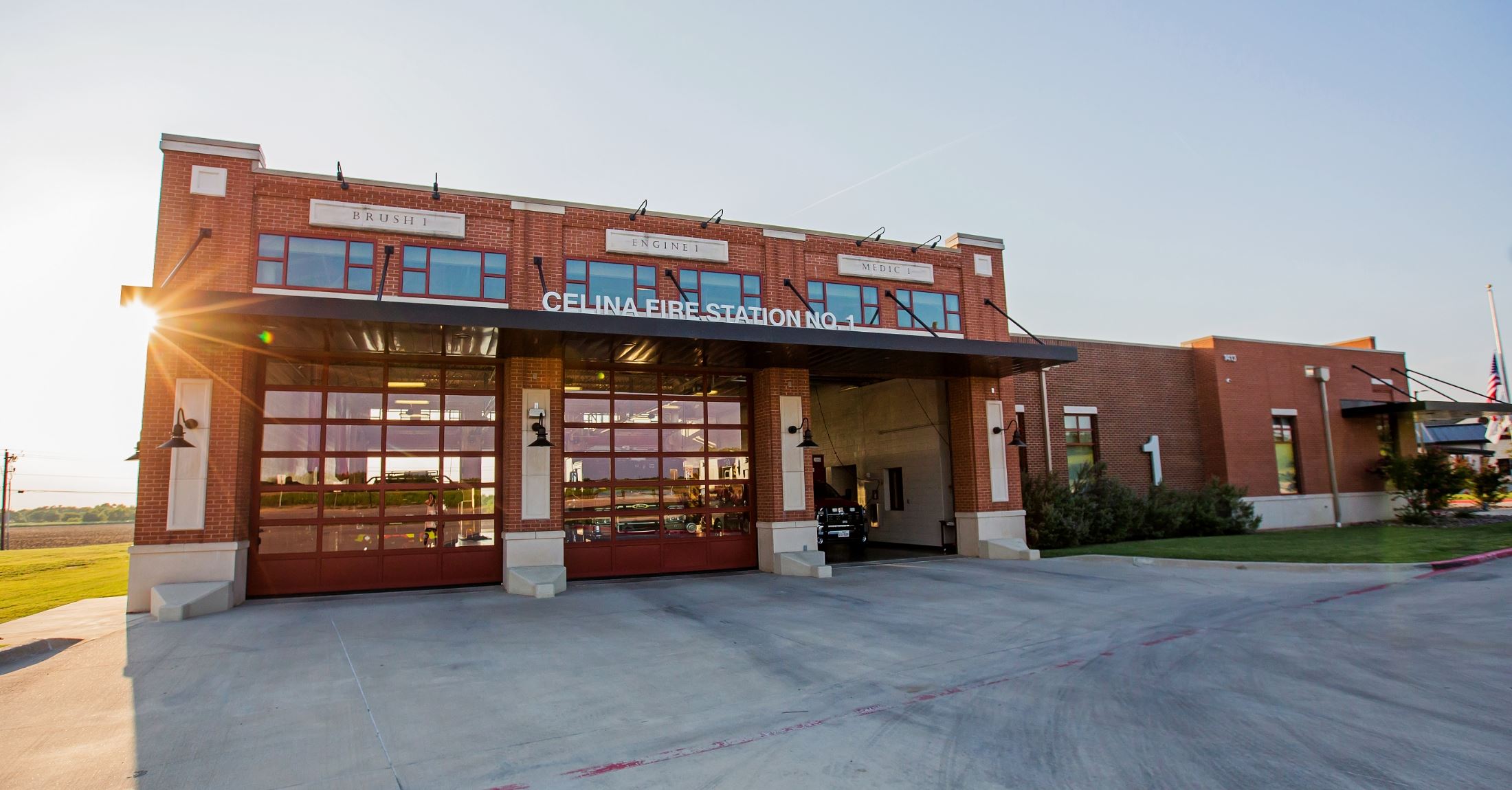
If you have ever watched a fire engine fight traffic and wondered whether there should be a station closer to your side of the city, you were asking the same question Celina is now answering with capital construction.
Fire Station No. 4 has moved from concept to schedule.
Quick Read
- Celina’s Fire Station 4 project is reported at $11.4 million.
- The station is expected to open in March 2027.
- The project is described at roughly 15,725 square feet with three bays, a training tower, and individual dorms.
- Recruitment for staffing is expected to begin in May 2026.
The Defining Number
The defining number is $11.4 million, the reported cost of Fire Station No. 4.
That number matters because this is not a symbolic facility. It is a major public safety expansion designed to change coverage geometry.
What the Plan Shows
The station is not being built as a minimal add-on.
Published details point to:
- three apparatus bays
- a training tower
- individual dorms
- an operational staffing plan of 18 firefighters once in service
The Texas Department of Licensing and Regulation project database separately identifies Fire Station #4 at 1205 Punk Carter Parkway, giving residents another way to track the project beyond city messaging.
Why It Matters
Growth changes response time because it changes distance, traffic, and call overlap.
A new station can improve:
- travel distance to incidents
- reliability during simultaneous calls
- coverage resilience during road closures
- out-of-service time created by long routing patterns
But buildings alone do not solve the problem. Staffing is the pacing item.
The Larger System
Celina’s road construction program and fire expansion are part of the same story. When corridors close or congestion increases, station placement matters more.
That is why the recruitment start date is important. The city is acknowledging that emergency coverage is a labor question as much as a construction question.
Bottom Line
Fire Station 4 is one of the clearest signs that Celina is building public safety around future demand, not only today’s map.
The real accountability question for late 2026 will not be whether a building is visible. It will be whether hiring and readiness are still on track.