If you moved to Celina in the last two years, you already know the feeling: the city is familiar, and then suddenly it is not. Your route takes longer. School traffic feels heavier. A subdivision that was not there a few months ago is suddenly framed and occupied.
The cleanest way to understand Celina right now is to treat population as a range and then look at the systems that have to match it.
Official estimates differ by method and timing. The city has publicly cited 64,726 residents as of Jan. 1, 2025. The U.S. Census Bureau’s QuickFacts estimate shows 51,661 as of July 1, 2024. NCTCOG’s 2025 estimate lists Celina at 61,834.
Quick Read
- Celina’s official population estimates do not match exactly, but all point to steep continued growth.
- NCTCOG attributes 15,980 additional residents to Celina from 2024 to 2025 alone.
- Multifamily, master-planned neighborhoods, and civic construction are all moving at the same time.
- The city is building civic capacity as if the current growth pace is not temporary.
The Defining Number
The number that best captures the current moment is 15,980, NCTCOG’s estimated one-year population gain for Celina from 2024 to 2025.
That number matters not because it settles the population debate, but because it helps explain why so many core systems are under visible pressure at once.
The Supporting Signals
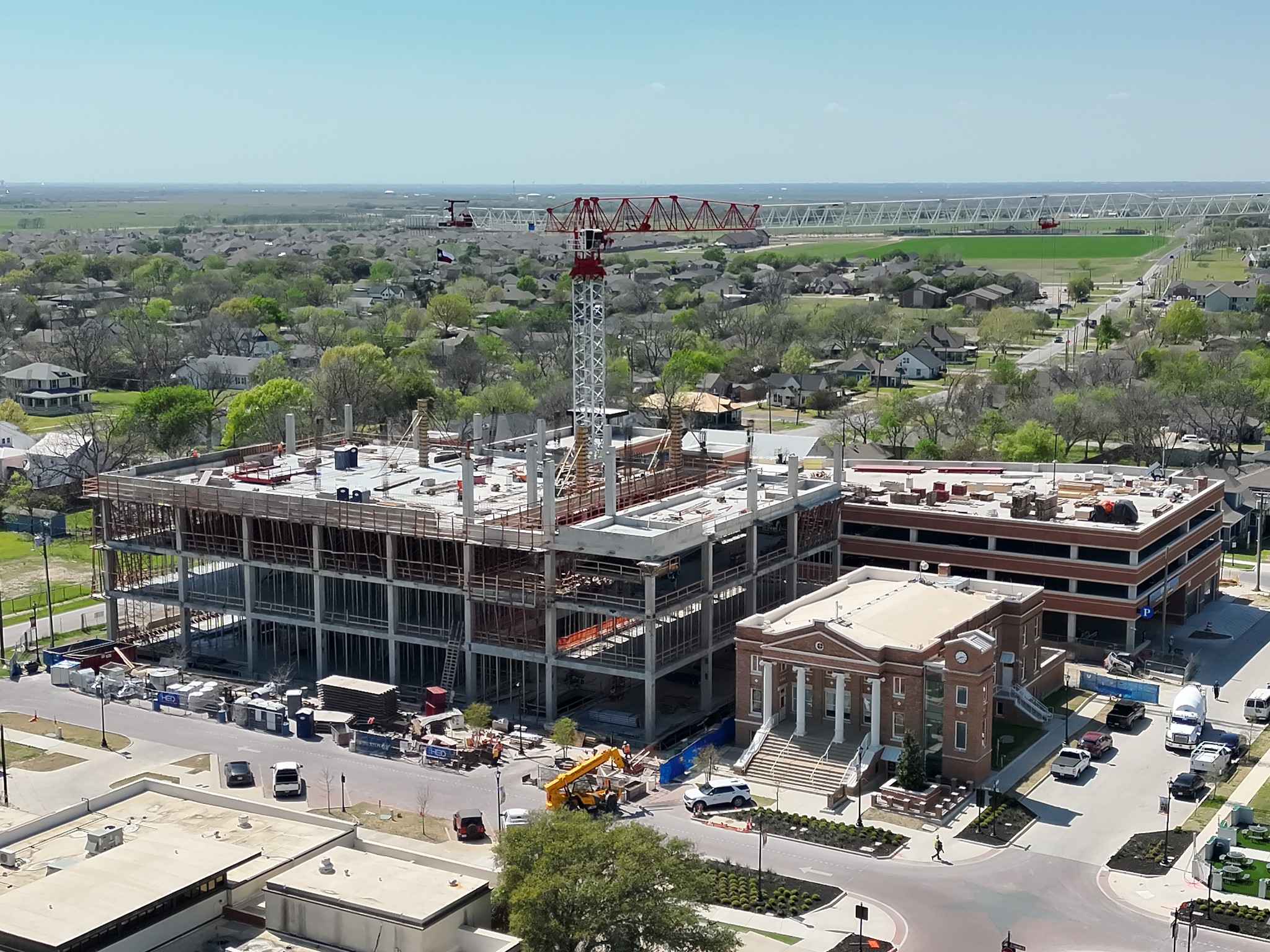
The growth signal is not only in demographic estimates. It is visible in the built environment.
Multifamily is arriving near the core. The Depot at Celina Station opened and began leasing in early February. A separate 436-unit apartment project is moving forward at Preston Road and Ownsby Parkway. Large master-planned neighborhoods continue expanding at the edge, including Ten Mile Creek, described as a 1,000-home community on 251 acres near the Collin County Outer Loop east of Coit Road.
When a city is simultaneously delivering apartments, neighborhood lots, road projects, fire facilities, and downtown civic infrastructure, it is operating from one assumption: more people are still coming.
Why It Matters
Residents usually feel growth before they see it in a report.
The friction points come first:
- longer travel times
- tighter school capacity
- more service demand
- more visible construction
- more delay between growth and the systems meant to support it
That is the practical definition of a city trying to catch up.
The Larger System
Celina’s challenge is not simply “more people.” It is the conversion problem that comes with growth.
Land has to become neighborhoods. Neighborhoods have to be matched by roads, utilities, staffing, and rules. That conversion takes longer than homebuilding by design.
That is why new construction should be read as a service indicator, not just a development story. When housing, civic projects, and institutional buildout all advance together, the city is trying to prevent future shortages, not only react to today’s strain.
Bottom Line
The exact population number depends on which official estimate you use. But the city’s roads, schools, housing pipeline, and capital plans all point to the same reality: Celina is still expanding fast, and the pressure is already visible in daily life.
If growth continues near the pace reflected in regional estimates and major capacity projects slip, the first cost residents will feel is time.