



Residents often describe fast-growth water pressure in one phrase.
“Are we running out of water?”
That question is understandable. It is also too simple.
The more precise issue in Celina is capacity: how much water and wastewater infrastructure the city needs, how fast it must be built, and how much it will cost residents over time.
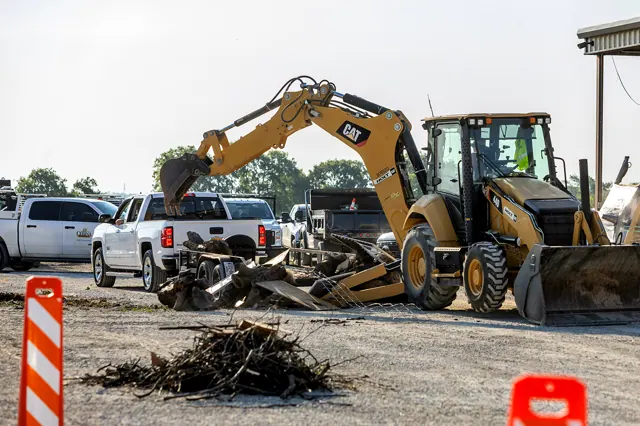
Community Impact reported that Prosper and Celina are tied to a $269 million expansion of the Doe Branch Water Reclamation Plant through the Upper Trinity Regional Water District. The plant had previously been expanded in 2021, but growth in both municipalities prompted another expansion.
The dominant number is $269 million.
That is the wastewater expansion number residents should understand.
Quick Read
- Celina’s water issue is best understood as capacity pressure, not empty taps.
- Community Impact reported a $269 million Doe Branch Water Reclamation Plant expansion serving Prosper and Celina.
- Celina’s five-year infrastructure planning identifies water and wastewater as major capital categories.
- Strategic Partnerships reported $86.8 million in planned 2026 water and wastewater utility spending in Celina’s capital plan.
- Celina has also discussed ordinance-level water conservation rules.
- Residents should expect water, sewer, conservation, and utility funding to become recurring growth issues.
The Pattern
Water and wastewater are now growth constraints.
That does not mean Celina cannot grow.
It means growth has to be matched by expensive utility infrastructure.
Every new subdivision adds water demand. Every new restaurant, school, apartment complex, and commercial building adds wastewater load. Every summer irrigation cycle adds peak pressure.
The systems are not optional.
Growth either pays for them early, pays more later, or feels the consequences through restrictions and strain.
The Wastewater Side
The Doe Branch expansion is important because wastewater capacity is one of the least visible parts of growth.
Residents see homes. They do not see treatment capacity.
Community Impact reported that Prosper and Celina agreed in 2024 to fund the $269 million expansion. The same report said the plant had already expanded in 2021, but continued population growth created the need for another expansion.
That timeline is the warning.
An expansion in 2021 did not end the need.
Growth created the next one.
The Water Side
Celina’s own capital planning points in the same direction.
The city says it is planning around rapid growth, with population projected to increase by about 12,597 residents in FY 2026. Strategic Partnerships reported that water and wastewater utilities make up the largest piece of Celina’s planned 2026 infrastructure spending, at $86.8 million.
That is convergence.
The city is growing. The utility plan is expanding. Conservation is being discussed. Regional wastewater capacity is being enlarged.
All of those signals point to the same issue.
The utility system is under growth pressure.
Conservation Is Part Of The Same Story
Celina has also discussed ordinance-level conservation rules, including irrigation and turf-related limits.
Residents may see that as a lawn issue.
It is bigger than that.
Conservation can reduce peak demand and buy time for infrastructure to catch up. It can also shift costs and expectations onto homeowners, HOAs, builders, and landscapers.
That is why the exact rule language matters.
What Residents Should Watch
Residents should track four things.
Rate changes.
Watering rules.
New development approvals.
Regional plant timelines.
Those items are connected. A city cannot approve growth forever without expanding water and wastewater systems, and those systems rarely get cheaper with time.
Bottom Line
Celina is not best described as a city running out of water.
It is a city entering a more expensive utility phase because growth is forcing larger capacity decisions.
If population, rooftops, and commercial development keep accelerating, water and wastewater will move from background infrastructure to one of the central public issues in Celina.