



At first, H-E-B was a grocery story.
In Melissa, it has become a corridor story.
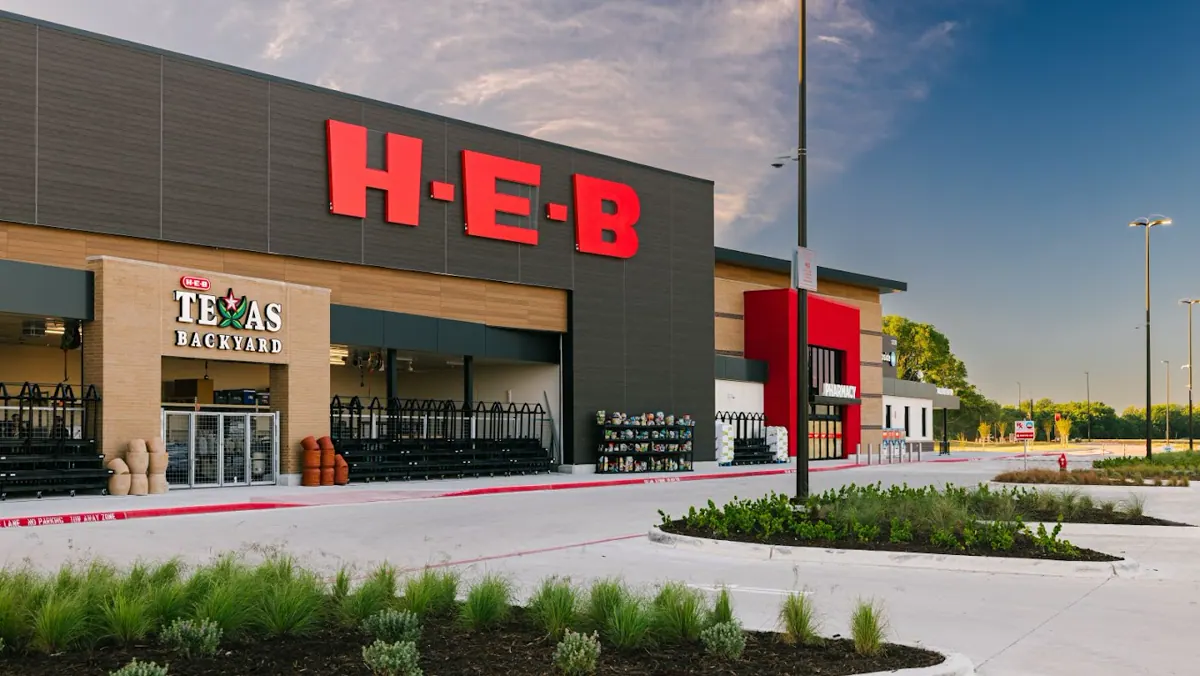
H-E-B opened its Melissa store on May 14, 2025, at 1230 Central Expressway, according to Community Impact. The store opened in a 136,000-square-foot space and included a pharmacy, True Texas BBQ, curbside, delivery, bakery, deli, and meat market.
The dominant number is 136,000 square feet.
That is large enough to change shopping habits and nearby development behavior.
Quick Read
- H-E-B Melissa opened May 14, 2025.
- The store is 136,000 square feet.
- It includes a pharmacy and True Texas BBQ, both with drive-thru service.
- The store sits near major growth corridors and other high-traffic anchors.
- Nearly one year later, residents are now asking what is being built near H-E-B and behind it.
- The H-E-B effect is showing up through traffic, retail interest, land activity, and daily shopping patterns.
The First Effect: Local Shopping
The simplest effect is convenience.
Before H-E-B, many residents left Melissa or relied on smaller local options for major grocery trips. H-E-B gave the city a regional grocery anchor with enough size and brand strength to pull shoppers from beyond Melissa.
That matters because grocery trips are routine.
A store used every week has more impact than a store used once a month.
It changes driving patterns, errand timing, and where residents spend household money.
The Second Effect: Nearby Land
Major grocery stores rarely remain isolated.
They increase the value of nearby pads and make adjacent commercial sites easier to market.
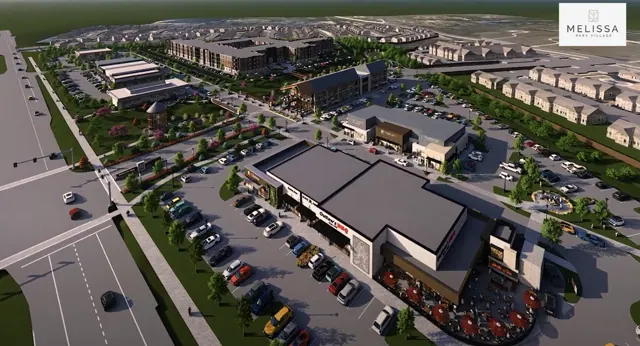
That pattern is now visible in public discussion. Residents are asking what is being built near the store. Developers and listings along Sam Rayburn Highway and nearby corridors are marketing sites around growth, traffic, rooftops, and proximity to major anchors.
The grocery store becomes a signal.
If H-E-B is there, other businesses assume daily traffic is there too.
The Third Effect: Traffic
The traffic impact is harder to measure without city-level counts, but residents understand the pattern.
Grocery stores create repeat trips.
Pharmacy, BBQ, curbside, fuel, nearby pads, and cross-shopping multiply those trips.
The issue is not whether H-E-B is popular.
The issue is whether the surrounding intersections and road network can keep absorbing more commercial activity as the area builds out.
The Fourth Effect: Expectations
H-E-B also raised expectations.
Once a city gets a major brand, residents start expecting the next layer: restaurants, medical offices, specialty retail, fitness, family entertainment, and better roads.
That is already happening in Melissa.
The public question has moved from “When is H-E-B opening?” to “What is coming next?”
That is a major shift.
The One-Year Test
The one-year test is whether H-E-B is functioning mainly as local convenience, a regional draw, or both.
If residents have shifted weekly grocery trips into Melissa, the store is keeping more daily spending local. If shoppers are coming from outside the city, the store is also turning the corridor into a regional stop.
Both outcomes bring value.
Both also bring traffic.
Bottom Line
H-E-B’s Melissa opening was not the end of a retail story.
It was the start of a new commercial phase.
Nearly one year later, the store is shaping where residents shop, what developers watch, and how the surrounding corridor is perceived. The warning is practical: every successful anchor creates the next wave of demand, and Melissa now has to manage what follows.